
 Cloud Services
 Classified Cloud
 Managed Services
 Kubernetes
 Public Sector
 Defense & Space
 Homeland Security
 Healthcare
 Regulated Industries
 Critical Infrastructure
 Enterprise IT-Modernization
 SaaS & Digital Platforms
Cloud Services
Classified Cloud
Managed Services
Kubernetes
SaaS & Digital Platforms
Cloud Services
Classified Cloud
Managed Services
Kubernetes
Sovereign Cloud Infrastructure for Police, Border Protection, and Security Agencies
In Everyday Operations
When seconds count, infrastructure must not be the weak link
Police and security agencies rarely make their most important technology decisions in advance; instead, they make them in the heat of the moment. Three situations illustrate how secunet cloud makes a difference in everyday operations.
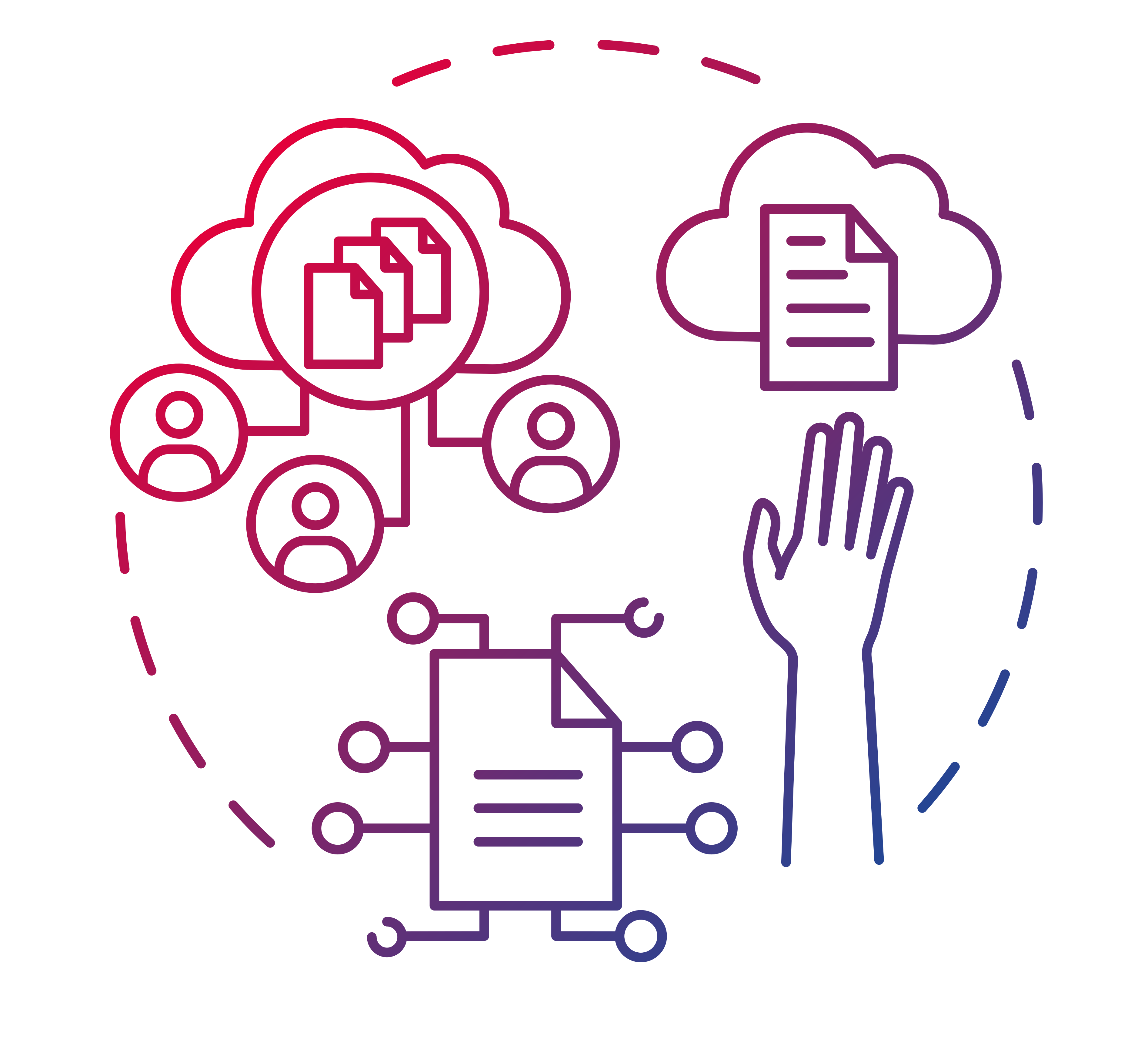
First responders must be able to reliably access wanted person and personal data while on the go, even when away from the station. secunet cloud ensures this connection and provides continuous availability without compromising data security.

Classified documents are to be exchanged between agencies without any disruption in the process and without the need for a classified courier. SINA-based cloud infrastructure enables end-to-end digital processing, up to the “SECRET” classification level.
New EU regulations, such as the Entry-Exit System, are suddenly increasing the workload at border crossings. Cloud resources scale with passenger volume, eliminating the need for permanently oversized on-site hardware.

Regulatory Context
Requirements Applicable to the Public Sector
For police and security agencies, several sets of regulations apply simultaneously. VS-NfD and GEHEIM govern the handling of classified operational and investigative data; BSI C5 is the assessment framework for cloud providers; and NIS2 mandates minimum standards for network and information security. State police laws govern the processing of personal data during operations, while the GDPR and the JI Directive apply to personal investigative data. At the border, European requirements such as the Entry-Exit System (EES) and eIDAS for digital identity documents also apply. secunet cloud covers the entire spectrum, from specialized applications to classified information.
Sovereignty
Remaining capable of acting means not being dependent on a single provider
In the field, what counts is the ability to adapt quickly when in doubt—both technically and organizationally. This cannot be added later; it must be part of the operational concept from the very beginning.
Open stack instead of a closed system
Kubernetes and OpenStack serve as the foundation. Security agencies can verify what is actually running, rather than relying on a vendor's promises.
Hardware-independent use
No requirement to use manufacturer-specific platforms. Procurement remains flexible, even across award cycles.
Roleback planned, not improvised
The ability to switch back to our own infrastructure or to another provider is planned from the outset; particularly when it comes to operational data, this is not an option but a requirement.
On-site, when the situation calls for it
The same cloud stack also runs directly at the control center or at the border crossing when connecting to external infrastructure is not an option.
Operations in Germany
If secunet takes over operations, this is done exclusively in certified data centers within Germany.
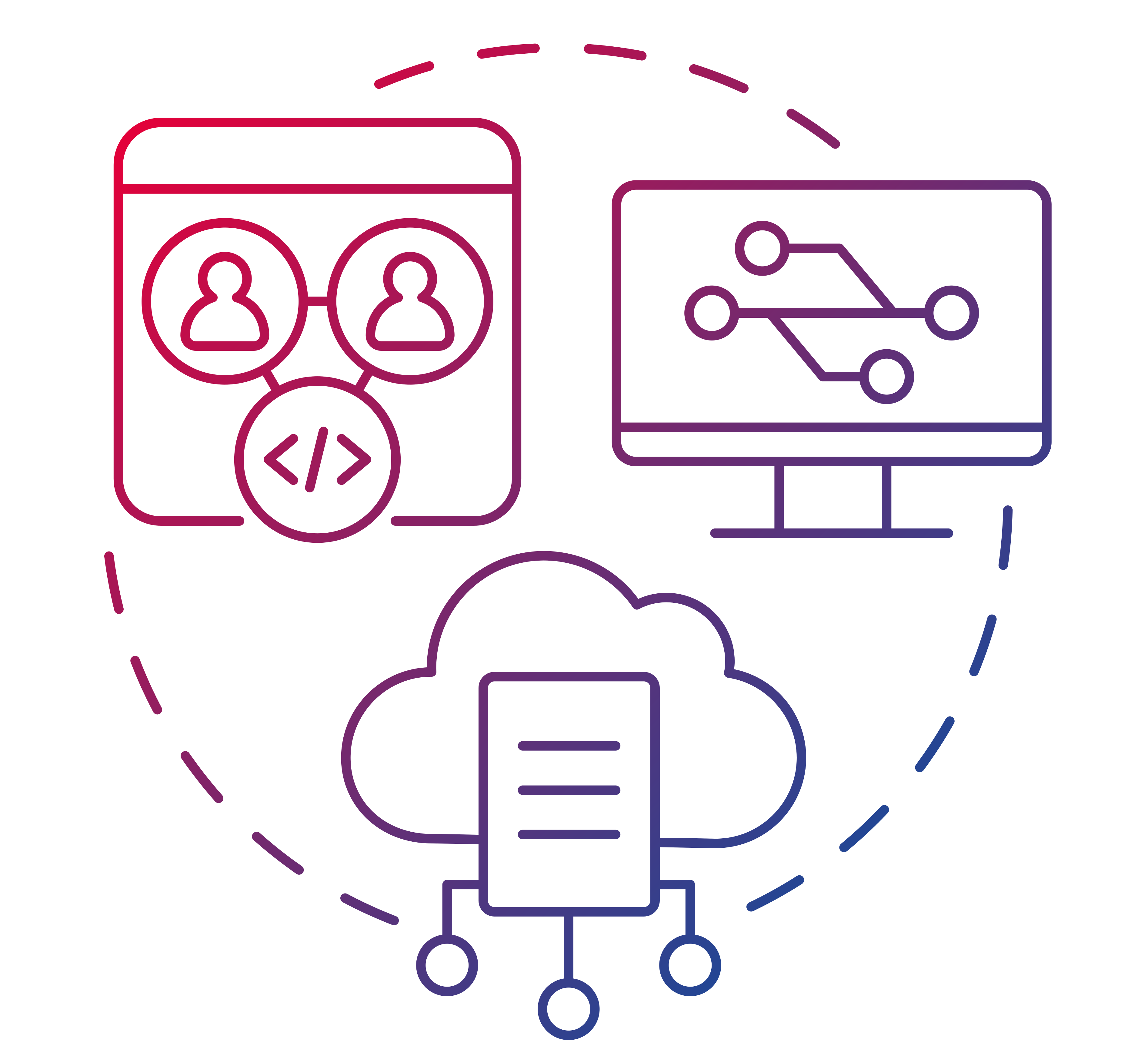
Four operational levels covering a range from public services to classified information

For citizen portals, appointment scheduling, and specialized applications that do not involve classified information. Full scalability with operations based in Germany.

The only cloud platform for classified information up to the “VS-NfD” level. For police networks, investigative data, and security-related specialized procedures.

A self-sufficient infrastructure for biometric processes and AI-powered analysis, without sharing data with external providers.
Zertifizierungen & Standards


Let's talk about your security architecture
Whether it’s mobile operational data, classified digitalization, or border control systems: We’ll work with you to assess your needs.
