
 Cloud Services
 Classified Cloud
 Managed Services
 Kubernetes
 Public Sector
 Defense & Space
 Homeland Security
 Healthcare
 Regulated Industries
 Critical Infrastructure
 Enterprise IT-Modernization
 SaaS & Digital Platforms
Cloud Services
Classified Cloud
Managed Services
Kubernetes
SaaS & Digital Platforms
Cloud Services
Classified Cloud
Managed Services
Kubernetes
The platform behind the platform that grows with you
In Everyday Product Use
Where Growth Meets the Limits of Your Own Infrastructure
A SaaS product thrives on its customers’ trust in availability and data protection. Three situations illustrate how the underlying platform plays a role in determining whether that trust is maintained.
A new SaaS product must be multi-tenant and GDPR-compliant from the start, because enterprise customers check for these features during the selection process. Building a dedicated infrastructure team for this takes time that the product doesn't have.

A sale event or campaign drives traffic far above normal levels in the short term. The platform must be able to handle this spike without having to maintain permanently oversized capacity.
When making their selection, enterprise customers specifically ask about data protection and how easily data and workloads can be migrated later on. An open, portable architecture provides a credible answer to both questions.

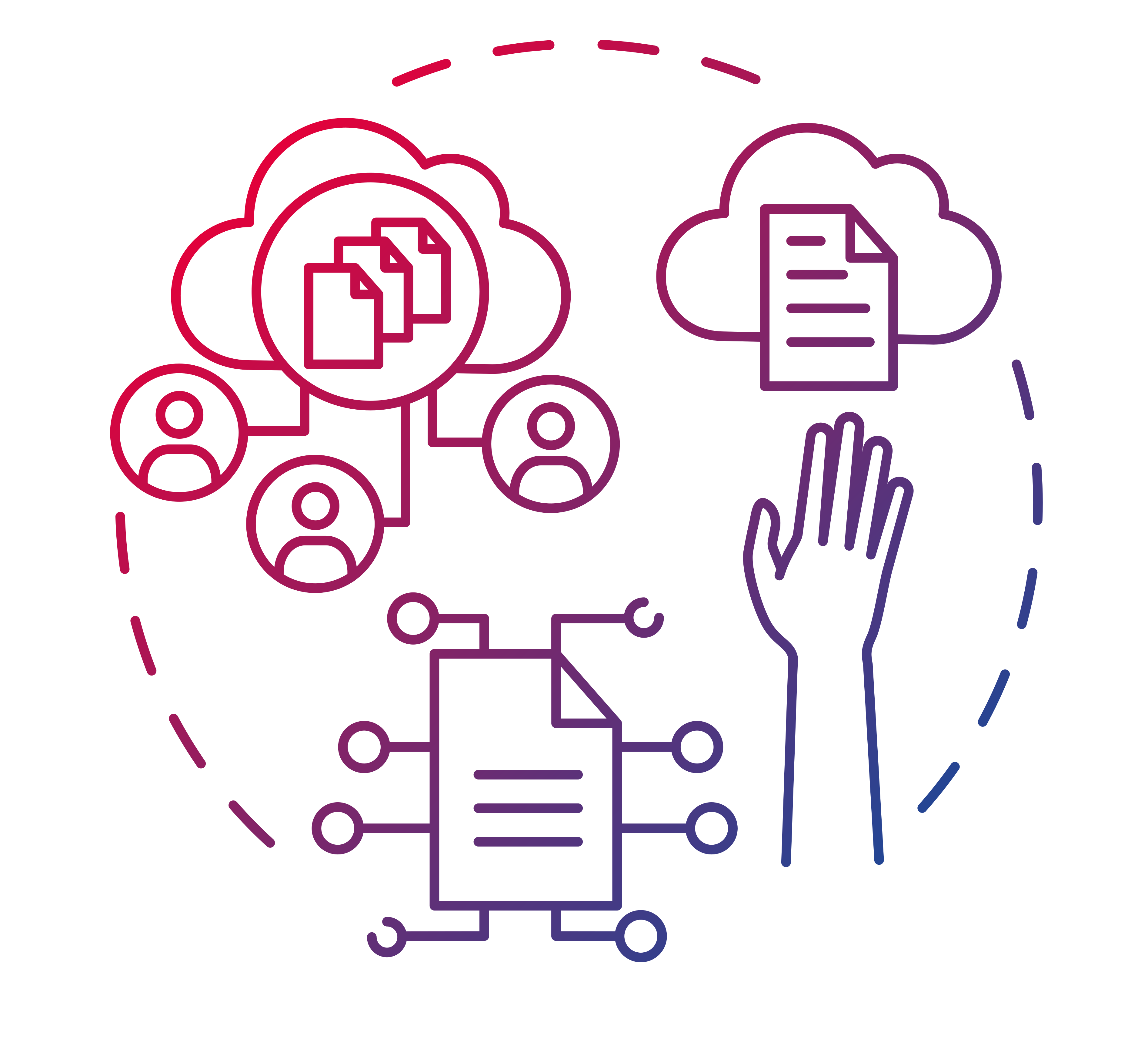
What Customers Look for During the Selection Process
What SaaS Providers Need to Expect During the Sales Process
For B2B customers, it is increasingly not just the product but also the underlying infrastructure that determines which vendor wins the contract. GDPR compliance and German data centers are exclusion criteria in many procurement processes—not just “nice-to-haves.” Multi-tenancy must be properly implemented from the start; retrofitting it later is expensive and risky. Larger customers specifically inquire about vendor lock-in and how portable data and workloads are in case of doubt. BSI C5 and ISO 27001 serve as proof without requiring the provider to explain the details themselves. Companies that are growing and becoming subject to NIS2 should have these fundamentals clarified before scaling up, not after.
Sovereignty
A selling point that must also hold up technically
It’s easy to claim “GDPR-compliant” and “no lock-in” on a website. Proving it in an enterprise customer’s contract is the real challenge.
Open Stack Instead of a Black Box
Kubernetes and OpenStack as the foundation. If a customer asks about this during an audit, we can actually demonstrate the answer.
Portability as a Technical Foundation
Workloads are not tied to a specific vendor. The “no vendor lock-in” argument used in sales pitches therefore also holds up to technical scrutiny.
BYO-IP and Open Interfaces
Customers with their own IP networks or existing integrations can be integrated, rather than having to adapt to a closed ecosystem.
Hybrid, if a customer requests it
The same cloud stack runs on-premises, in the public cloud, or in a hybrid environment, should a single large customer have specific requirements regarding the location of operations.
Operations in Germany
If secunet takes over operations, this is done exclusively in certified data centers located in Germany.
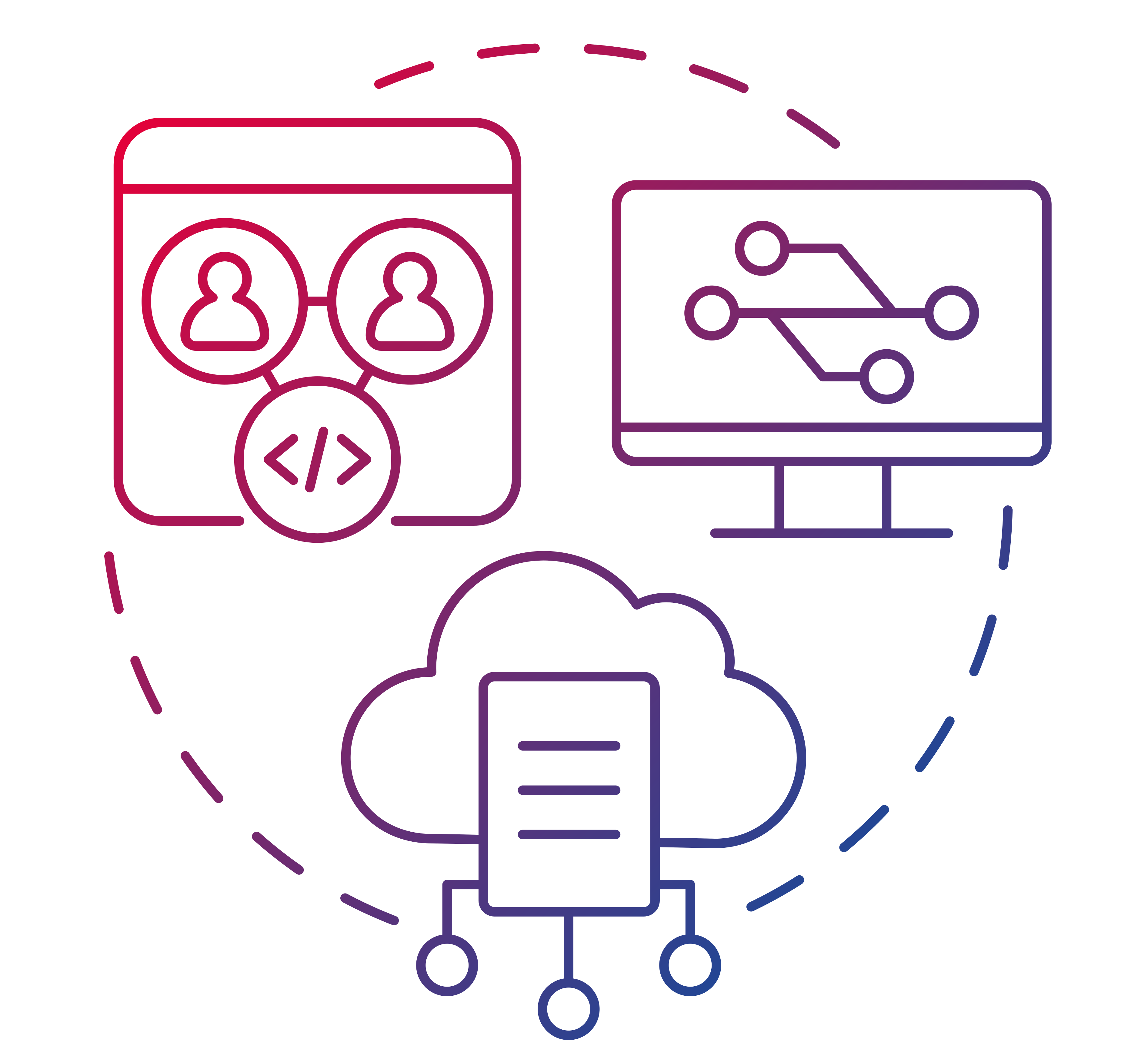
From MVP to multi-tenant platform: three operational stages

For new SaaS products and digital platforms currently under development. Full scalability with operations based in Germany.

A highly available platform for multi-tenant, production-ready applications, backed by operational expertise rather than self-management.

Robust infrastructure for AI features within your own product, without sharing customer data with external providers.
Zertifizierungen & Standards


Let's talk about your scaling strategy
Whether it’s an MVP, multi-tenant architecture, or large-scale managed Kubernetes: We’ll work with you to assess your needs.
