
 Cloud Services
 Classified Cloud
 Managed Services
 Kubernetes
 Public Sector
 Defense & Space
 Homeland Security
 Healthcare
 Regulated Industries
 Critical Infrastructure
 Enterprise IT-Modernization
 SaaS & Digital Platforms
Cloud Services
Classified Cloud
Managed Services
Kubernetes
SaaS & Digital Platforms
Cloud Services
Classified Cloud
Managed Services
Kubernetes
Cloud Infrastructure for Companies who can't afford to take any risks
In the Day-to-Day of Audits
When an Audit Can Determine the Fate of a Business Model
In regulated industries, the next audit is never far off. Three scenarios illustrate how a well-designed cloud architecture can make the difference between passing an audit and having to make corrections.
DORA requires verifiable digital operational stability, including audit rights for regulatory authorities at cloud providers. secunet cloud provides this verifiability from the very beginning, rather than having to construct it retroactively.

Validated systems for research and production data must consistently meet GxP requirements, including with every platform update. The infrastructure must not be a source of uncertainty.
New features should go live quickly without every change triggering a governance review. A platform with built-in compliance enables both speed and control.

Regulatory Context
Requirements Applicable to Regulated Industries
The applicable regulatory framework depends on the industry; in most cases, several apply simultaneously. Banks and insurance companies are subject to DORA and the supervisory requirements of BaFin (BAIT, VAIT, KAIT, depending on the type of institution) as well as MaRisk. For the pharmaceutical and life sciences sectors, the GxP guidelines apply to the validation of systems that generate data for regulatory approval processes. Automotive suppliers often operate in accordance with TISAX. Across all industries, the GDPR, NIS2 for critical and highly critical facilities, and BSI C5—as an assessment framework for cloud providers—apply. secunet cloud provides the technical foundation on which this compliance can be demonstrated—not retroactively, but from the very beginning of the architecture.
Sovereignty
Compliance isn't a certificate you buy once
An auditor doesn't verify marketing promises, but rather what can actually be demonstrated: in the code, in operations, and in the event of a provider switch.
A verifiable basis rather than blind trust
Kubernetes and OpenStack as an open platform. An auditor can see exactly what is running, rather than relying on assurances from a “black box.”
Multi-cloud remains a viable option
Workloads are not tied to a specific vendor. Those required by regulation to diversify across multiple providers can also implement this from a technical standpoint.
Exit strategy included
Workloads based on open standards can actually be migrated—it’s not just a contractual promise. That’s the difference between an exit clause on paper and a switch that actually works from a technical standpoint.
On-premises for the most sensitive workloads
The same cloud stack also runs in our own data center when certain data is not allowed to leave the premises.
Operations in Germany
If secunet takes over operations, this is done exclusively in certified data centers located in Germany.
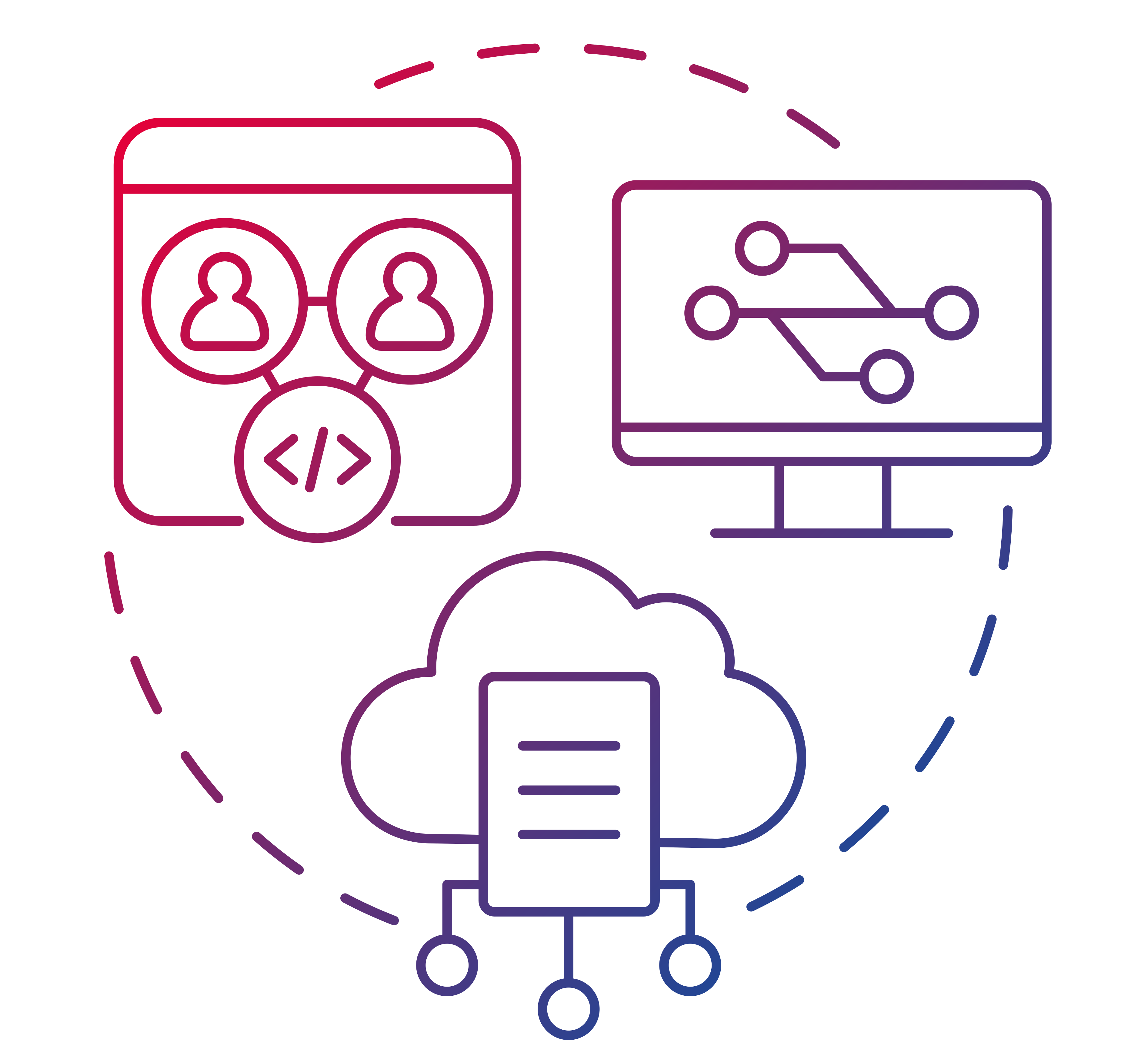
From prototype to mission-critical core system: three operational stages

For new digital services, prototypes, and applications that are not mission-critical. Full scalability with operations based in Germany.

A highly available platform for core systems with audit requirements, backed by operational experience rather than self-operation.

A robust infrastructure for AI-powered analysis of sensitive corporate data, without sharing it with external providers.
Zertifizierungen & Standards


Let's talk about your compliance requirements
Whether it’s DORA, GxP, or a multi-cloud strategy: We’ll work with you to assess your needs.
